
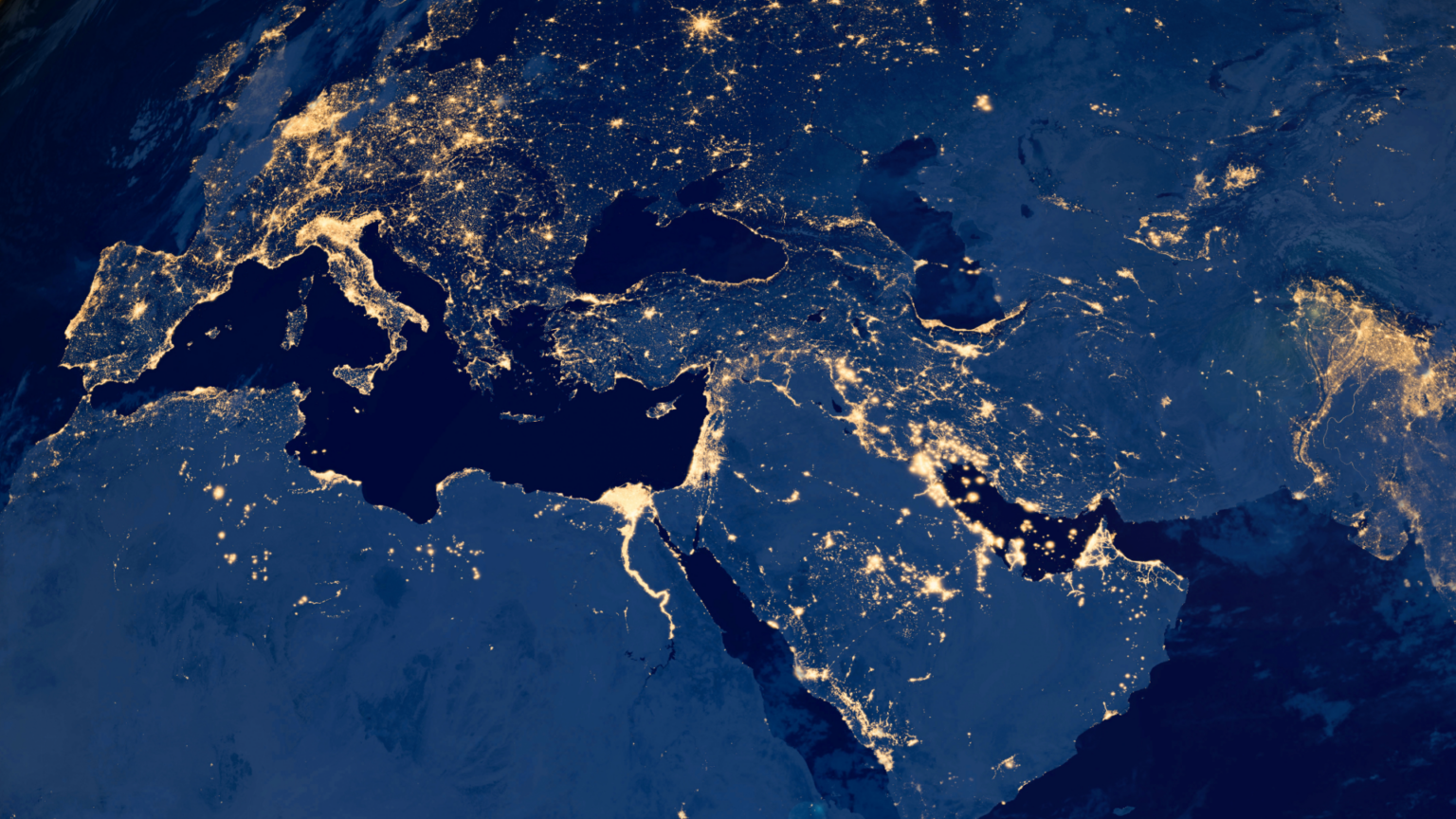
Tensions in the Middle East have caused some turbulence for investors. While this can feel unsettling, it’s important to remember that periods of heightened geopolitical risk often lead to short term market volatility, which is a normal part of investing.
Below we provide more information on the conflict and its market implications, based on data available at the time of writing.
Market Update: Iran conflict
On Saturday 28th February, the United States and Israel carried out coordinated military strikes on Iran, resulting in the death of Ali Khamenei. Iran has since responded with attacks on neighbouring territories. The humanitarian and geopolitical consequences of these events are significant, and it remains unclear how long tensions may persist or how Iran’s political leadership will evolve in the coming months.
While these are serious global developments, our focus here is on what this could mean for financial markets and, importantly, for your investments.
Market Reaction So Far
Periods of geopolitical tension often lead to short-term market volatility, and this situation has been no exception.
Oil prices have risen, reflecting concerns about energy supply in the Middle East and potential disruption to the Strait of Hormuz, a vital route for global oil transportation. Gold prices have also moved higher, as investors traditionally view gold as a “safe haven” asset during times of uncertainty. Gold can have a stabilising effect for diversified portfolios, however it can also be volatile and short-term movements should not be assumed to continue indefinitely.
Equity markets have experienced some declines as investors assess the broader economic implications. However, the reaction has not been uniform. The UK’s leading index, the FTSE 100, has shown relative resilience, supported by its higher weighting towards energy companies, which have benefited from rising oil prices.
It is common in the early stages of geopolitical events for equity markets to fall as uncertainty increases. Longer-term performance, however, is typically driven not by headlines but by the lasting impact on corporate earnings, economic growth and inflation.
Perspective and Context
Movements in equity markets so far have been relatively measured. In part, this reflects the fact that tensions in the region had been building for some time, meaning investors had already begun factoring heightened risk into asset prices.
Much of the media coverage has understandably focused on the recent rise in oil prices and the potential risks to global energy supply. This is reminiscent of the early stages of the Russian invasion of Ukraine in 2022.
As of Monday 2nd March, Brent crude oil is trading at approximately $80 per barrel, having risen by around $10 in just four days. As of Tuesday the 10th of March, it sits at around $90 per barrel after a brief spell above $100. While this is a notable short-term increase, it is important to keep the move in context. During the initial phase of the Ukraine conflict in 2022, Brent crude prices climbed to nearly $128 per barrel at their peak. 1
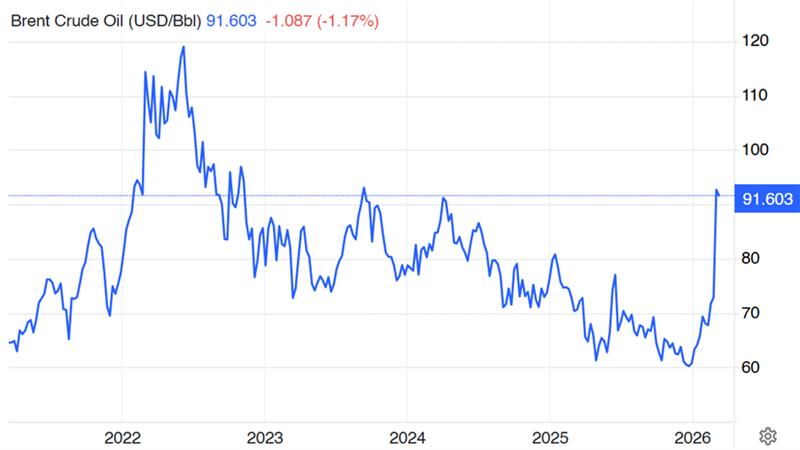
Source: Trading Economics (10.03.2026)
This comparison does not diminish the potential risks associated with current developments. However, we’re still quite a way off the prices we saw in 2022.
Looking ahead, the duration and scale of the conflict will matter. A swift de-escalation would likely allow markets to stabilise. However, prolonged disruption, particularly if shipping through the Strait of Hormuz were significantly restricted, could place further upward pressure on energy prices and potentially feed through to global inflation. These are factors markets will continue to monitor closely.
The Importance of Diversification
We have been in contact with a number of the investment managers we work alongside, and there has been a clear and consistent message that their portfolios are designed with exactly these types of risks in mind.
Rather than attempting to predict specific geopolitical events, investment managers build portfolios to withstand uncertainty. This s achieved through diversification, spreading investments across different regions, asset classes and sectors, helping to reduce reliance on any single outcome or market.
The recent strength in areas such as energy and gold is a practical example of how diversification can help cushion portfolios when equity markets are under pressure.
Staying Focused on the Long Term
Short-term volatility can understandably feel uncomfortable. However, history consistently shows that remaining invested through periods of uncertainty is a key driver of long-term returns. Markets have navigated wars, political crises, recessions and pandemics in the past, and patient, disciplined investors have typically been rewarded over time. Importantly, past performance does not guarantee future results and should not be relied upon as a predictor of outcomes, but maintaining a long-term perspective has historically helped investors navigate periods of uncertainty more effectively.
Your financial plan is built around long-term objectives, not short-term headlines. While we expect some continued uncertainty as the situation evolves, we believe maintaining perspective and discipline remains the most prudent course of action.
If recent events have affected your comfort level, it may help to reflect on:
- Whether your long-term goals have changed
- Have your income or expenses changed significantly
- The size of your emergency cash reserve
- Whether your concerns stem from short term headlines
- Whether selling now might lead to regret if markets recover
If your answers to any of these questions are different from before the recent market falls, get in touch. We’re here to talk it through and help you decide on the best next steps.
As always, we are monitoring developments closely and remain in regular contact with our investment partners to ensure portfolios continue to be managed appropriately.
If you have any concerns or would like to discuss your investments in more detail, please do not hesitate to get in touch.
This update is for information only and does not constitute personal financial advice.
References:
- Trading Economics: https://tradingeconomics.com/commodity/brent-crude-oil – Data sourced as of 10th March 2026